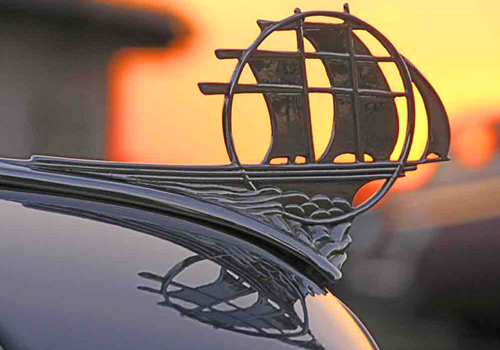
One of my fans puts it this way:
"Jane Strauss captures images with her camera that most of us would never take the time to look close enough to see - the detail on an old car's hood ornament, the lush growth along a flooded waterway, the frosted roses as winter approaches, and the delicate tendrils of wildgrass. Her images are sharp, crisp, and sigh-inspiring, making the viewer wonder how much beauty and detail they have missed by not looking closely enough at our environment. It is a wonderful gift to be able to see these details and hidden images through Jane's eyes. Her renderings using digital software allow her to bring certain elements to light so that what might seem to others like the simplest subject - a bird on a tree, or old tools, turns into true art."
I have been interested in art since forever. I first picked up a camera in the late 1960s on the East Coast, when at the age of fifteen I learned to shoot and develop 35 mm black and white film. I’ve been enamored of graphic arts ever after. Since then, I have tried to be practical, pursued multiple academic courses of study, relocated to the Twin Cities in the mid-1970s, raised a family, worked with community organizations, nonprofits, and in the practice of law, before returning to my first love, art. As a digital photographer, I am largely self-taught, only beginning to work at that craft in 2004, after my eldest daughter had become an artist and teacher in the medium.
My art flows from who I am, a person placed on the autistic spectrum in midlife who has often wondered why I see detail many folks miss. I look at the trees and the forest, and see the geometric shapes between and within them. I wait for the animals to settle, and come right up to them for a look. I notice small details and parts of things that for the usual person blend in with their surroundings. I look up to the sky when many would look down or straight ahead. I focus on reflections. Once images are digitized, I use Photoshop to crop, enlarge and adjust them to reflect what I saw, rarely using other aspects unless they substantially strengthen the primary image, or provide a strongly-contrasting accompanying image.
Before this year, when I have begun a distance learning course in the technical aspects of photography, I had no formal training in digital photography, other than one course in use of Adobe Acrobat. I had very limited, informal training in the technical aspects of film photography years ago, limited to use of the darkroom for black and white film developing and printing. My formal art training consisted of general art and drawing classes in high school and at the Museum of Fine Arts in Boston, MA, in the 1960s.
Most of my early work was shot with a "point and shoot" Olympus 765C, whose primary advantage is its built in 10x Optical Zoom lens. Recently I upgraded to a D-SLR, whose capabilities I am only beginning to tap. Early work was small in format, I can now print up to 24 inches wide, thanks to the addition of a couple of new printers to my armament.